Cooperation with JICA
- HOME
- International Cooperation
- Cooperation with JICA
- FY2025 Knowledge Co-Creation Program (KCCP): "Promotion of Global Networking on Anti-Trafficking in Persons"
Cooperation with JICA
- Event Report
-
FY2025 Knowledge Co-Creation Program (KCCP): "Promotion of Global Networking on Anti-Trafficking in Persons"
Date:Date: October 21 (Tue), 2025 – January 15 (Thu), 2026
The National Women’s Education Center (NWEC) held the Knowledge Co-Creation Program "Promotion of Global Networking on Anti-Trafficking in Persons (TIP)" from October 21, 2025, to January 15, 2026, commissioned by the Japan International Cooperation Agency (JICA).
Six officials from five countries across Africa, Asia, and Europe participated in the seminar. All participants are actively engaged in anti-trafficking efforts within their respective government ministries, police departments, prosecutor’s office, and immigration bureaus. Participating countries were Kingdom of Cambodia, Republic of the Marshall Islands, United Republic of Tanzania, Kingdom of Thailand, and Ukraine.
1.Overview
The program focused on strategies for the TIP prevention and victim protection within the five participating countries and Japan. Participants examined public-private initiatives and conducted in-depth cases studies.
At the beginning of the program, participants learned about Japan’s public-private framework and initiatives based on the "Action Plan to Combat Trafficking in Persons" through lectures and site visits. Each participant presented the anti-trafficking measures of their own country by delivering a Country Report. Following these presentations, they exchanged diverse views and shared common challenges as well as good practices.
Towards the end of the program, participants presented an "Action Plan" which summarized activities applicable under their purview, outlining concrete schedules focusing on the eradication of TIP and victim protection from the survivor’s perspective. On the final day, the program’s lecturers and JICA officials were invited to an online seminar where participants presented their final outputs and the summary of their Action Plans. Throughout the program, the importance of fostering global networking to combat TIP was reaffirmed
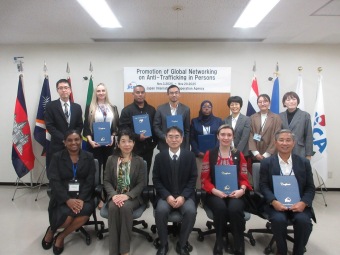 Group photo at the Closing Ceremony
2. Highlights
Online Program (Prior to Arrival in Japan)
On Tuesday, October 21, an Online Orientation was held via Zoom. Participants presented Inception Reports describing their organizations, current responsibilities, and expectations for the Program. Before departing their home countries, they also viewed on-demand videos covering the Japanese government’s anti-trafficking measures (compiled by the Cabinet Secretariat) and JICA’s TIP initiatives.
In -Japan Program (November 4 – November 19)
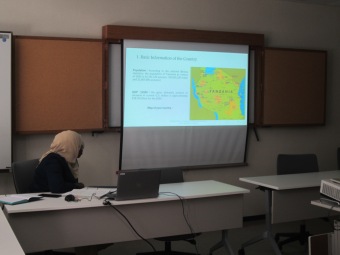
Following the program orientation, participants presented Country Reports summarizing the current TIP situations, challenges, and good practices in their nations. These discussions revealed common issues of labor and sexual exploitation, as well as the emerging threats of technology-facilitated TIP, including organized fraud. This includes fraudulent online recruitment where individuals lured for overseas jobs online are ultimately coerced into exploitative work (including sexual exploitation) that differs significantly from their initial agreements. Law enforcement officials (police, prosecutors, and immigration officers) also highlighted the common difficulties of identifying TIP cases from other illegal acts.
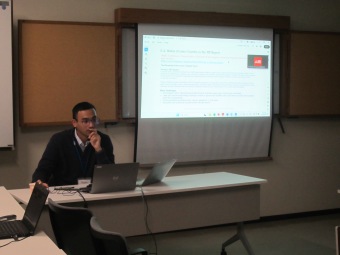 Country Report presentation
The program facilitated participants to reconfirm the significance of the support based on human rights and survivor centered approach through the lectures about “Human Trafficking in Japan from the past to the present” delivered by Dr. Nobuki Fujimoto, Senior Researcher at the Asia-Pacific Human Rights Information Center (HURIGHTS OSAKA) and the online lecture “Human Rights-Based Approach to TIP in Southeast Asia and Beyond” by Ms. Genevieve Sauberli, Regional Migration Advisor, Office of the United Nations High Commissioner for Human Rights (OHCHR).
Then, the program provided an overview of Japan's Anti-TIP structure through lectures, visits and exchange the views by the Cabinet Secretariat, National Police Agency (NPA), Tokyo Regional Immigration Services Bureau and Tokyo Metropolitan Women’s Consultation and Support Center, as well as the International Organization for Migration (IOM).
Following the lecture by the Anti-TIP Safety Division, Community Safety Bureau of NPA on “Measures against trafficking in persons in Japan" Personal Safety and Juvenile Division, Community Safety Bureau of NPA presented “Current situation of child pornography offenses and countermeasures in Japan". It touched on the case of abusing social media or generative AI and the case of producing child pornography by Japanese perpetrators outside of Japan. Necessity of international cooperation for effective investigations were pointed out.
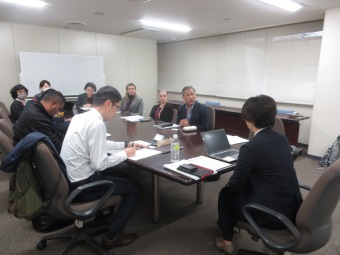 Q&A at the Cabinet Secretariat
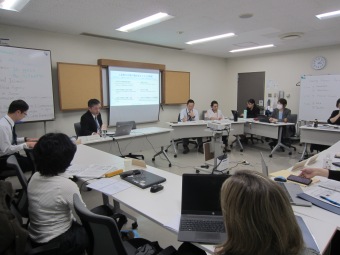 Lecture on NPA’s initiatives
During the IOM session, participants engaged in role-playing exercise as police officer and a TIP victim which helped to understand how to build trust with survivors who may be reluctant to cooperate with the police due to fear of retaliation or imposition of debt payment.
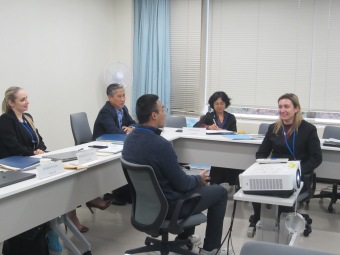 Role-play in the IOM session
The program invited civil society organizations and experts to present their activities and experiences of prevention and protection of TIP victims. The participants gained insights from the visits and lectures by NPO Solidarity Network with Migrants Japan (SMJ), General Incorporated Association, Social Inclusion Support Center which operates a nation-wide multi-lingual hotlines (including social media consultations), Social Welfare Corporation "Ichiryukai" which run mid-to-long term shelters for women and children, NPO PAPS which engages protection of victims of technology facilitated sexual exploitation, Attorney Ms. Ryoko Minagawa, Secretary General, Lawyers for Trafficked Victims (LTV), General Incorporated Association Colabo which dedicates to outreach support for young women, and Specially Appointed Professor Yuriko Saito at Daito Bunka University.
These sessions helped the participants deepen their understanding of how various agencies and NPOs collaborate. They also reaffirmed that TIP often targets systemic vulnerabilities. Therefore, discussion underscored multi-agency collaboration to cover the vulnerabilities, support based on survivor-centered approach, and public awareness to foster a society that will not tolerate TIP.
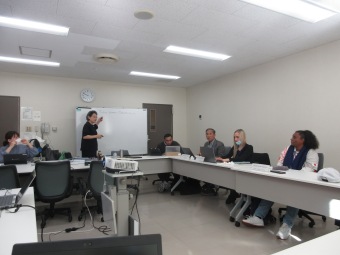 Discussion on key takeaways
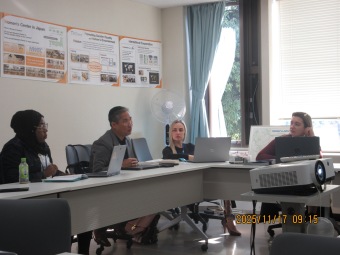 Exchange of views on victim identification
Action Plan Presentation and Online Seminar
Individual participants developed own Action Plan and presented in the end of the In-Japan Program. All the participants will implement the following action plans in their home countries over the next 6 to 12 months.
Kingdom of Cambodia: Providing Appropriate Support Services for LGBTQ+ victims of TIP.
Republic of the Marshall Islands: Enhancing collaboration between agencies, including the National Police, to improve coordination and response.
United Republic of Tanzania: Awareness-raising to prevent labor exploitation among Tanzanians working as domestic workers in abroad.
Kingdom of Thailand: Joint Online Monitoring TIPS lead information local with Foreign JICA partners.
Ukraine: Legal amendments to introduce trials in absentia for punishment of criminals and compensation for victims, and
Organization of TIP Training Programs for Investigators.
On the final day (November 19), an online seminar was held with the attendance of program lecturers, JICA staff, and JICA long-term scholarship participants.
At the closing ceremony, completion certificates were awarded to each participant.
 Action Plan presentation
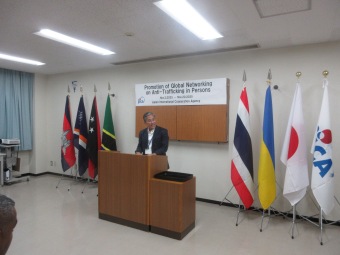 Speech by the representative of the participating countries at the Closing Ceremony
3. Online Follow-up Meeting
Participants attended an Online Follow-up meeting on January 15, 2026, to report on the progress of the Action Plans they developed during the In-Japan program.
NWEC would like to express our sincere gratitude to the Cabinet Secretariat, National Police Agency, Tokyo Regional Immigration Services Bureau, Tokyo Metropolitan Government, international organizations, civil society organizations, legal experts, and all network members for their immense cooperation in providing lectures, hosting visits, and facilitating discussions for this program.
International Cooperation
- International Seminar
- FY2019 Seminar for Gender Equality Officers and Women Leaders in the Asia Region
- FY2018 Seminar for Gender Equality Officers and Women Leaders in the Asia Region
- FY2017 Seminar for Gender Equality Officers and Women Leaders in the Asia Region
- FY2016 Seminar for Gender Equality Officers and Women Leaders in the Asia Region
- FY2015 Seminar for Gender Equality Officers and Women Leaders in the Asia Pacific Region
- FY2014 Seminar for Gender Equality Officers and Women Leaders in the Asia Pacific Region
- FY2013 Seminar for Gender Equality Officers and Women Leaders in the Asia Pacific Region
- FY2012 Seminar for Gender Equality Officers and Women Leaders in the Asia Pacific Region
- FY2011 Seminar for Gender Equality Officer and Women Leaders in the Asia Pacific Region
- FY2010 Empowerment Seminar for Women Leaders in the Asia Pacific Region
- FY2009 Empowerment Seminar for Women Leaders in the Asia Pacific Region Final Report
- FY2008 Empowerment Seminar for Women Leaders in the Asia Pacific Region
- FY2007 Empowerment Seminar for Women Leaders in the Asia Pacific Region
- FY2006 Empowerment Seminar for Women Leaders in the Asia Pacific Region
- NWEC Global Seminar
- FY2025 NWEC Global Seminar: Addressing Technology-Facilitated Gender Based Violence (TFGBV): Approaches to Eradicate the Invisible Harm
- FY2024 NWEC Global Seminar: Gender Equality and Care
- FY2023 NWEC Global Seminar: Gender Mainstreaming & Strengthening Institutional Mechanism with Gender Perspective
- FY2022 NWEC Global Seminar: Does Digital Technology Advance Gender Equality?
- FY2021 NWEC Global Seminar: Combating Gender-Based Violence – “Building Back Better” from the Covid-19 Crisis
- FY2020 NWEC Global Seminar: Covid-19 and Gender
- FY2019 NWEC Global Seminar: Gender and Media
- FY2018 NWEC Global Seminar: Promotion of the Advancement of Women - What Japan can learn from Iceland about Gender Equality?
- FY2017 NWEC Global Seminar: Promotion for Advancement of Women Lessons from Germany
- FY2016 NWEC Global Seminar: Promotion for Advancement of Women –Lessons from Europe
- FY2015 International Symposium: Gender Equality and Women's Empowerment
- FY2014 International Symposium: Keys to Diversity and Women's Leadership
- FY2013 NWEC International Symposium:Gender Equality for Men
- FY2012 NWEC International Symposium:To Make a Society without Violence against Women a Reality
- FY2011 NWEC International Symposium
- FY2010 International Forum for Women's Empowerment
- FY2009 International Forum for Women's Empowerment
- FY2008 International Forum for Women's Empowerment Final Report3
- FY2008 International Forum for Women's Empowerment Final Report2
- FY2008 International Forum for Women's Empowerment Final Report1
- Cooperation with JICA
- FY2025 Knowledge Co-Creation Program (KCCP): "Promotion of Global Networking on Anti-Trafficking in Persons"
- FY2025 Knowledge Co-Creation Program "Eradicating Sexual and Gender-Based Violence (SGBV)"
- FY2025 Knowledge Co-Creation Program: Bangladesh “Strengthening Capacity to Address Gender-Based Violence"
- FY2024 Knowledge Co-Creation Program on "Promotion of Global Networking on Anti-Trafficking in Persons"
- FY2024 Knowledge Co-Creation Program "Eradicating Sexual and Gender-Based Violence (SGBV)"
- FY2023 Knowledge Co-creation Program "Promotion of Networking among ASEAN Countries on Anti-Trafficking in Persons”
- FY2023 Knowledge Co-Creation Program "Eradicating Sexual and Gender-Based Violence (SGBV)"
- FY2022 Knowledge Co-creation Program "Promotion of Networking among ASEAN Countries on Anti-Trafficking in Persons”
- FY2022 Knowledge Co-Creation Program "Eradicating Sexual and Gender-Based Violence (SGBV)"
- FY2021 Knowledge Co-creation Program "Promotion of Networking among ASEAN Countries on Anti-Trafficking in Persons”
- FY2020 Knowledge Co-creation Program "Promotion of Networking among ASEAN Countries on Anti-Trafficking in Persons”
- FY2019 Knowledge Co-creation Program "Promotion of Networking among ASEAN Countries on Anti-Trafficking in Persons”
- FY2018 Knowledge Co-creation Program "Promotion of Networking among ASEAN Countries on Anti-Trafficking in Persons”
- Issue-specific Training “Seminar on Promotiom of Networking among ASEAN Countries on Anti-Trafficking in Persons”
- Basic Information-Gathering Survey/Workshop Seminar on the Economic Independence for Women in Central America and the Caribbean (El Salvador/Dominican Republic)
- Regional Gender Seminar in Central and South America
- 2015 Issue-specific Training "Seminar on Promotion of Networking among Asian Countries on Anti-Trafficking in Persons"
- Seminar on the Promotion of Education for Girls and Women II
- International Conference/International Exchange
- Visit by Professor Hilado from the University of the Philippines Visayas
- Online meeting with Seisen International School elementary students
- Visitor: Mansfield Fellows
- Visitor:JICA Knowledge Co-Creation Program (KCCP) on "Women's Empowerment through Business for Central American Integration System (SICA) Member Countries"
- The 68th Session of the Commission on the Status of Women
- Visitor: Madam Sustjie Mbumba, First Lady of the Republic of Namibia
- Workshop of commemorating the donation of the Beate Shirota Gordon archive materials
- Meeting with Korean Women’s Development Institute (KWDI)
- The Coalition of Finnish Women's Associations (NYTKIS) Secretary General Ms. KAKKOLA’s Courtesy Call to Foreign Minister KAMIKAWA
- The Coalition of Finnish Women's Associations (NYTKIS) Secretary General Ms. KAKKOLA’s Japan Visit Program
- The 67th Session of the Commission on the Status of Women
- NGO CSW67 Forum
- Webinar with Korean Women’s Development Institute (KWDI)
- The 66th Session of the Commission on the Status of Women (Hybrid format)
- Online meeting with international graduate students from the Appropriate Technology course at the University of Tsukuba
- The 65th session of the Commission on the Status of Women
- Lecture "The Beate Sirota Gordon Archives at Mills College"
- Participation in 2nd AGenT
- The 64th session of the Commission on the Status of Women
- Dr. Wang from National Taiwan University visits NWEC
- Japan Network of Women Engineers and Scientists and The Japan Inter-Society Liaison Association Committee for Promoting Equal Participation of Men and Women in Science and Engineering: 9th Japan Korea China Women Leaders Forum for Science & Technology
- Researcher from the KWDI visits NWEC
- Visit by a delegation from the Socialist Republic of Vietnam Ministry of National Defense
- Briefing on the Reykjavik Index for Leadership
- Women's Archives Center Exhibition "Beate Sirota Gordon and gender equality in Japanese Constitution"
- Visit from the Guangxi Women’s Federation
- Participation in the 63rd Session of the Commission on the Status of Women
- 7th Global Forum on Gender Statistics
- FY2018 International Symposium hosted by Korean Institute for Gender Equality Promotion and Education “Gender Equality at Schools”
- Visit from All-China Women’s Federation(ACWF)
- Participation in the 62nd Session of the Commission on the Status of Women
- The 14th KIGEPE International Symposium “Empowering Women’s Leadership: expanding influence and innovation”
- Participation in the 61st Session of the Commission on the Status of Women
- Visit from the Batis Center for Women
- 2011 Asia Women Eco-Science Forum (a forum of science and engineering leaders in Japan, China and Korea)
- The 60th Session of the Commission on the Status of Women
- The 59th Session of the United Nations Commission on the Status of Women
- The 58th Commission on the Status of Women
- The 57th Session of the United Nations Commission on the Status of Women
- International Symposium: Gender Awareness Education for Sustainable Development
- Thirtieth Anniversary Programs
- Attendance at the Ceremony Commemorating the 25th Anniversary of the Korean Women’s Development Institute (KWDI)
- Japanese-Filipino children (JFC)* from the Philippines-based NGO “DAWN” visit the Center
- Visitors from Abroad to NWEC
- Research report on Multicultural Family Support in South Korea
- Workshop on Gender and Education: Life-long Learning for Women’s Empowerment
- Lecture Delivered by a Visiting Researcher
- Connections: Bringing Together the Next Generation of Women Leaders in Science, Technology, Engineering and Mathematics
- Conclusion of Memorandum of Understanding on Exchange and Cooperation with the Ministry of Women's Affairs, Royal Government of Cambodia
- Visit to Japan by the Minister of Women’s Affairs of the Royal Government of Cambodia
- KIGEPE Delegation Visit
- Officials of Ministry of Information and Communications of the Socialist Republic of Vietnam visited NWEC
- The 56th Commission on the Status of Women
- Dr. Barker's visit
- Multidisciplinary Intellectual Exchange for Women Leaders from the United States, Japan, South Korea and the Philippines
- Courtesy visit to University of Hawai`i
- Delegation of Board for the Advancement of Women, Ministry of Finance of the Socialist Republic of Vietnam visited NWEC
- Visit Korean Women's Development Institute (KWDI)
- Report on Participation in the 5th World Social Forum on Migration
- A group led by the Vice President of the Korean Women's Development Institute visited NWEC
- A disaster management specialist from India visits the Center
- Visit to the Korean Institute for Gender Equality Promotion & Education (KIGEPE) and others
- Secretary of State, Ministry of Justice, Kingdom of Cambodia visited NWEC
- Research conducted in the Republic of the Philippines
- Research on the Comparative Study of the Gender Equality Policy in Southeast Asian Countries in the Kingdom of Cambodia
- Ochanomizu University and A Canadian Women’s Study Researcher visited NWEC
- Aigyung Yang, Research Fellow and Former Director of Strategy Board for Women Friendly Policies of the Korean Women's Development Institute (KWDI) Visits NWEC
- Delegation of the Ministry of Defense of the Socialist Republic of Vietnam visited NWEC
- Delegation from the Women and Development Center, of the Vietnam Women's Union, Visited NWEC
- The "7th Asia-Pacific Forum on Development and Gender" was held in Seoul, South Korea
- HOME
- International Cooperation
- Cooperation with JICA
- Cooperation with JICA
- FY2025 Knowledge Co-Creation Program (KCCP): "Promotion of Global Networking on Anti-Trafficking in Persons"